C Programming Course – Build Strong Programming Foundations

The C Programming course is designed to build a strong foundation in programming logic, problem solving, and core computer science concepts. Ideal for students, beginners, and aspiring software developers.

Enroll Now

C Programming Course

Beginner Friendly

No Programming Background Needed

2–3 Months

Course Duration

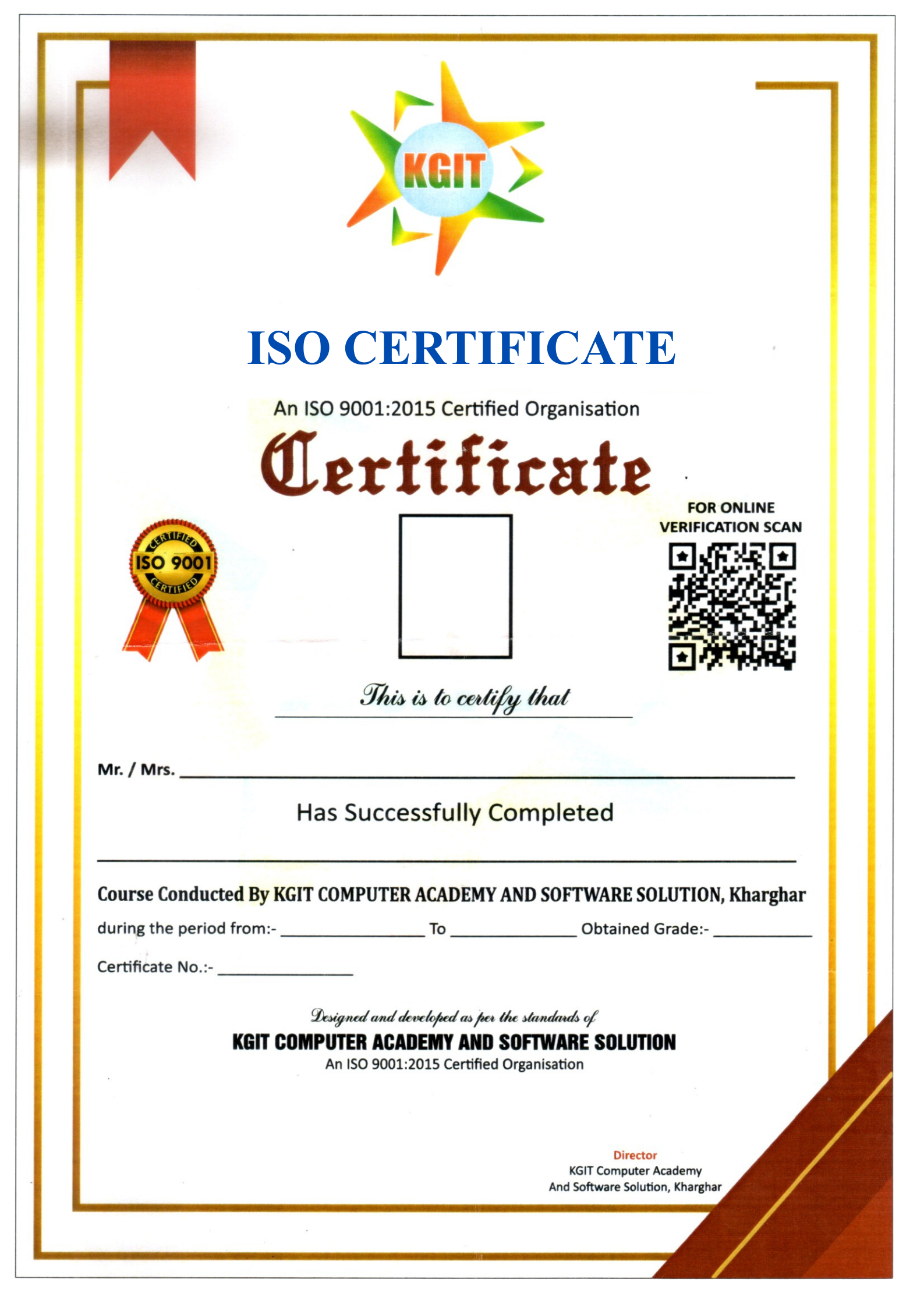
Certificate

KGIT Certified

Practical Coding

Hands-on Programs

Career Ready

Programming Fundamentals

About C Programming Course

The C Programming course focuses on developing problem-solving skills, logical thinking, and a deep understanding of how programs work internally.

Students learn syntax, control structures, functions, arrays, pointers, file handling, and memory management using real-time examples.

At KGIT Computer, training is fully practical with continuous coding practice and concept-wise problem solving.

C Programming Curriculum

Getting Started & Brief Introduction
Decision Control Structure
Loop Control Structure
Case Control Structure
Functions and Pointers
Data Types Revisited
The C Preprocessor
Arrays
Operating on Strings
Structures
Console Input / Output
File Input / Output
More Issues in Input / Output
Operations on Bits
Miscellaneous Features
Under Windows
Windows Programming
Graphics under Windows
Interaction with Hardware
Under Linux
More Linux Programming
Memory Mapping
C Traps & Pitfalls
  • Programming Language
  • About C Programming
  • C Character Set
  • Constants, Variables & Keywords
  • Constants in C
  • Variables in C
  • Writing a C Program
  • Instructions and Assignments
  • Basic Operators in C Programming
  • Decision Control Structure & the if Statement
  • The if-else Statement
  • Use of Logical Operators
  • Different types of Operators
  • Points to remember
  • Loops and the While loop
  • While loop
  • For Loop
  • Operators in Loop
  • The Odd Loop
  • Break Statement
  • Continue Statement
  • Do-while loop
  • Tips to remember
  • Decisions using switch
  • The Tips and Traps
  • Switch versus if-else Ladder
  • The goto keyword
  • About Functions
  • Passing Values between Functions
  • Scope Rule of Functions
  • Calling Convention
  • One Dicey Issue
  • Advanced Features of Functions
  • Function Declaration and Prototypes
  • Call by Value or Call by Reference
  • An Introduction to Pointers
  • Pointer Notation
  • Function Calls
  • Basics of Call by value and call by reference
  • Conclusions
  • Recursion
  • Recursion and Stack
  • Adding Functions to the Library
  • Data type
  • Integer number variables
  • Integers, signed and unsigned
  • Chars, signed and unsigned
  • Floats and Doubles
  • Issues related to Data types
  • Storage Classes in C
  • Automatic Storage Class
  • Register Storage Class
  • Static Storage Class
  • External Storage Class
  • To study the Ground rules for the Storage Class
  • Features of C Preprocessor
  • Preprocessor and Macro Directives
  • Macros with Arguments and Macros versus Functions
  • Various Directives
  • What are Arrays?
  • Usage of Arrays
  • Pointers and Arrays
  • Passing an Entire Array to a Function
  • Two Dimensional Arrays
  • Initializing a 2-Dimensional Array
  • Memory Map of a 2-Dimensional Array
  • Pointers and 2-Dimensional Arrays
  • Pointer to an Array
  • Passing 2-D array to a Function
  • Array of Pointers
  • Three Dimensional Array
  • What are Strings?
  • Pointers and Strings
  • Standard Library String Functions
  • Two-Dimensional Array of Characters
  • Array of Pointers to Strings
  • Limitations of Array of Pointers to Strings
  • Why Use Structures?
  • Declaring a Structure
  • Accessing Structure Elements
  • Array of Structures
  • Additional Features of Structures
  • Uses of Structures
  • Types of I/O
  • Formatted Console I/O Functions
  • sprintf() and sscanf() Functions
  • Unformatted Console I/O Functions
  • Data Organization
  • File Operations
  • Opening a File
  • Reading from a File
  • Trouble in Opening a File
  • Closing the File
  • Counting Characters, Tabs, Spaces
  • A File-copy Program
  • Writing to a File
  • File Opening Modes
  • String (line) I/O in Files
  • The Awkward Newline
  • Record I/O in Files
  • Text Files and Binary Files
  • Record I/O Revisited
  • Database Management
  • Low Level Disk I/O
  • A Low Level File-copy Program
  • I/O Under Windows
  • Using argc and argv
  • Detecting Errors in Reading/Writing
  • Explanation
  • Standard I/O Devices
  • I/O Redirection
  • Redirecting the Output
  • Redirecting the Input & Both Ways at Once
  • Binary System & Bitwise Operators
  • Bitwise AND Operator
  • Bitwise OR Operator
  • Bitwise XOR Operator
  • One's Complement Operator
  • Shift Operator
  • The showbits() Function
  • Enumerated Data Type and its uses
  • Understanding with a Program
  • Renaming Data Types with typedef
  • Typecasting
  • Bit Fields
  • Pointers to Functions
  • Functions Returning Pointers
  • Functions with Variable Number of Arguments
  • Unions & Union of Structure
  • Uses of Windows
  • Integers
  • The Use of typedef
  • Pointers in the 32-bit World
  • Memory Management & Device Access
  • DOS Programming Model
  • Windows Programming Model
  • Event Driven Model & Windows programming
  • The First Windows Program
  • Hungarian Notation
  • Windows API Basics
  • Creating a Window
  • Handling Messages
  • Menus and Dialog Boxes
  • Controls in Windows
  • Graphics fundamentals
  • Device Independent Drawing
  • Hello Windows program
  • Drawing Shapes
  • Types of Pens
  • Types of Brushes
  • Code and Resources
  • Freehand Drawing, the Paintbrush Style
  • Capturing the Mouse
  • Device Context, a Closer Look
  • Displaying a Bitmap
  • Animation at Work
  • WM_CREATE and On Create()
  • WM_TIMER and On Timer()
  • Points to remember
  • Hardware Interaction
  • Hardware Interaction, DOS Perspective
  • Hardware Interaction, Windows Perspective
  • Communication with Storage Devices
  • The Read Sector() Function
  • Accessing Other Storage Devices
  • Communication with Keyboard
  • Dynamic Linking
  • Windows Hooks
  • Caps Locked, Permanently
  • Mangling Keys
  • Key Logger
  • What is Linux
  • C Programming Under Linux
  • The "Hello Linux" Program
  • Processes
  • Parent and Child Processes
  • More Processes
  • Zombies and Orphans
  • Pipes
  • Signals
  • Shared Memory
  • Semaphores
  • Sockets
  • Introduction to Memory Map
  • Memory Organization
  • Segmentation
  • Loading OS & Booting Process
  • The resident and transient memory area
  • Program memory area at run time
  • Memory representation of data & function objects
  • Introduction
  • Lexical pitfalls
  • Exceptions, String & characters
  • Understanding Declaration
  • Exceptions in Operators' precedence
  • Use of Semicolons
  • The Switch statement
  • Calling functions
  • The Dangling else problem
  • Linkages
  • External Types
  • Expression evaluation sequence
  • Issues related to actual parameters
  • Eschew Synedocche
  • Library Function
  • Preprocessor
  • Portability pitfalls
  • Signed & Unsigned characters
  • Random numbers
  • Portability problems
01
Basics Getting Started & Introduction
+
  • About C Programming
  • C Character Set
  • Constants, Variables & Keywords
  • Writing a C Program
  • Basic Operators
02
Logic Decision Control Structure
+
  • if, if-else Statements
  • Logical Operators
  • Nested Conditions
03
Logic Loop Control Structure
+
  • while, for, do-while Loop
  • Break & Continue
  • The Odd Loop
04
Logic Case Control Structure
+
  • switch Statement
  • Switch vs if-else Ladder
  • goto keyword
05
Core Functions & Pointers
+
  • Defining & Calling Functions
  • Call by Value / Reference
  • Pointer Notation
  • Recursion & Stack
06
Core Data Types & Storage Classes
+
  • int, float, char, double
  • Signed & Unsigned
  • auto, register, static, extern
07
Core Preprocessor & Arrays
+
  • Macros & Directives
  • 1D & 2D Arrays
  • Pointers & Arrays
08
Core Strings & Structures
+
  • String Library Functions
  • Pointers & Strings
  • Declaring & Using Structures
  • Array of Structures
09
I/O Console & File I/O
+
  • Formatted I/O (printf/scanf)
  • File Open, Read, Write
  • Text vs Binary Files
  • argc & argv
10
Advanced Bits, Misc & Memory
+
  • Bitwise Operators
  • Enums, Unions, typedef
  • Memory Mapping & Segmentation
11
Platform Windows Programming
+
  • Windows Programming Model
  • Event Driven Model
  • Graphics & Drawing
  • Hardware Interaction
12
Platform Linux Programming
+
  • C Under Linux
  • Processes & Forking
  • Pipes, Signals, Sockets
  • Zombies & Orphans
13
Pro C Traps & Pitfalls
+
  • Lexical & Operator Pitfalls
  • Declaration Issues
  • Switch & Dangling else
  • Portability Problems

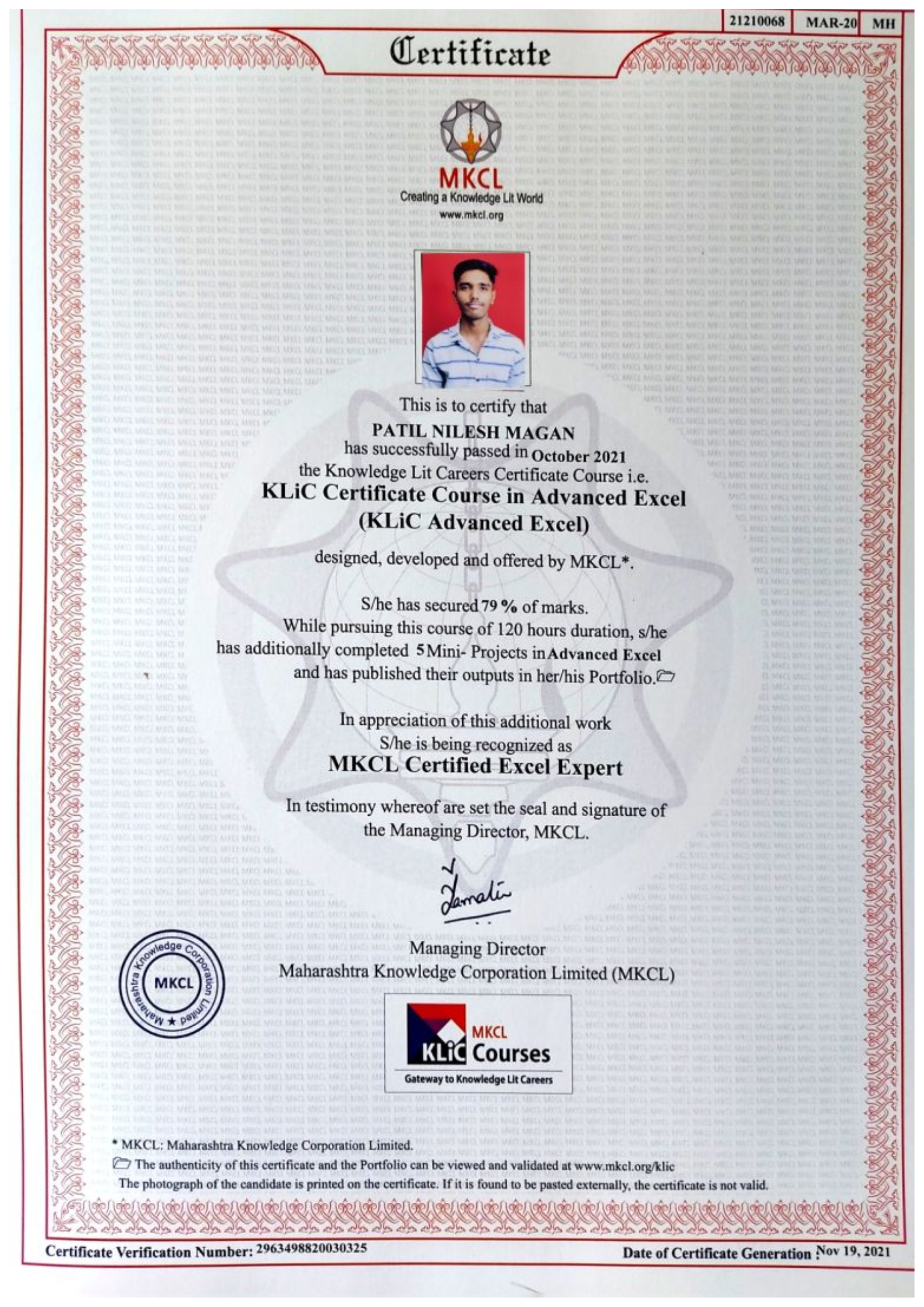
Certification For This Course

Receive a C Programming Certificate after successful course completion.

Register Now
Get in Touch

Ready to start your learning journey? Contact us today!

Visit Our Institutes

📍 Our Locations

KGIT Computer Academy & Solutions
B8/01, Gharkul,
Sector-15, Kharghar,
Behind D-Mart,
Navi Mumbai – 410210

📞 Phone

+91 8454085780

⏰ Working Hours

8:00 AM – 9:00 PM

Monday – Saturday

Send us a Message